
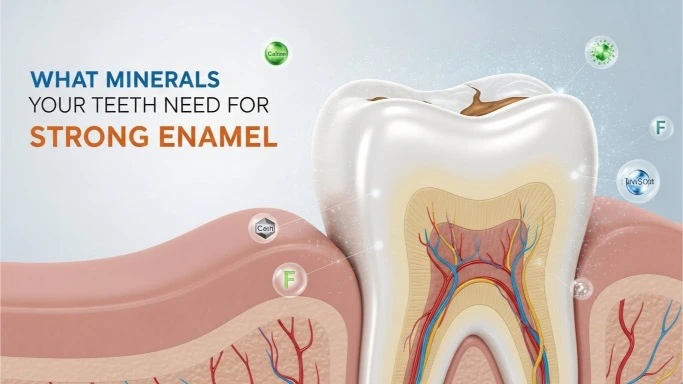
Strong enamel don’t come from brushing alone. That might sound surprising, but it’s true. You can brush twice a day, floss regularly, and still struggle with sensitive teeth, weak enamel, or frequent cavities. Why? Because tooth enamel depends heavily on minerals—and many people don’t get enough of the right ones.
Your enamel is the hardest substance in your body, but it isn’t invincible. Acidic foods, sugar, dry mouth, grinding, and even stress slowly wear it down. Once enamel weakens, teeth become more sensitive, more prone to decay, and harder to protect.
The good news is this: your teeth can re-strengthen through proper mineral support. While enamel can’t fully regrow, it can remineralize when your mouth has the nutrients it needs.
In this guide, we’ll break down the essential minerals your teeth need for strong enamel, how they work, where to get them naturally, and how to protect your enamel long-term. This isn’t theory—it’s practical, everyday advice you can actually use.
What Is Tooth Enamel and Why Minerals Matter
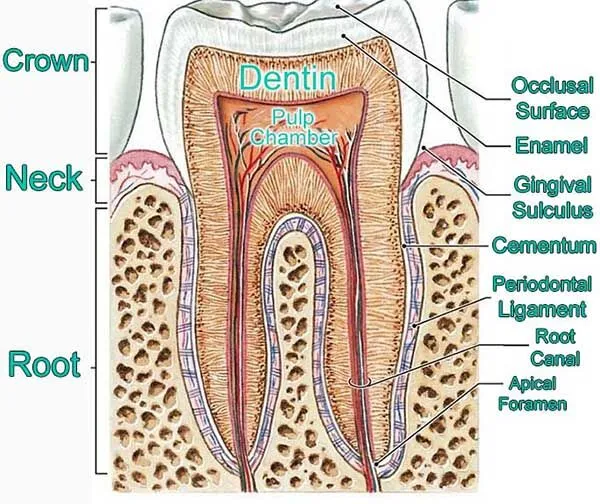
Tooth enamel is the outer protective layer of your teeth. It shields the sensitive inner layers from bacteria, heat, cold, and acid. Enamel itself is made mostly of mineral crystals, not living tissue.
That means two important things:
- Enamel doesn’t repair itself like skin or bone
- Enamel strength depends on constant mineral balance
Every day, your enamel goes through two processes:
- Demineralization – acids pull minerals out of enamel
- Remineralization – minerals are redeposited into enamel
When remineralization keeps up, teeth stay strong. When it doesn’t, enamel weakens.
This balance depends heavily on what minerals are available in your mouth and bloodstream.
The Most Important Minerals for Strong Tooth Enamel
Calcium – The Foundation of Strong Teeth
Calcium is the primary building block of enamel. Without enough calcium, enamel becomes thin, brittle, and vulnerable.
Why calcium matters for enamel
- Strengthens enamel structure
- Supports remineralization
- Reduces cavity risk
- Helps neutralize acid damage
Low calcium levels are often linked to increased tooth sensitivity and higher decay rates.
Best natural calcium sources
- Dairy products (milk, cheese, yogurt)
- Sardines and salmon with bones
- Almonds
- Leafy greens like kale and collard greens
- Fortified plant milks
Calcium works best when paired with other minerals—especially phosphorus and magnesium.
Phosphorus – Calcium’s Essential Partner
Phosphorus doesn’t get as much attention, but it’s just as important as calcium. Together, they form hydroxyapatite, the mineral compound that gives enamel its hardness.
How phosphorus helps
- Binds with calcium to strengthen enamel
- Repairs early enamel erosion
- Supports overall tooth structure
Foods rich in phosphorus
- Eggs
- Fish
- Poultry
- Nuts and seeds
- Whole grains
If you’re getting calcium but not enough phosphorus, your enamel may still struggle to stay strong.
Magnesium – The Mineral That Makes Calcium Work
Magnesium helps regulate how calcium is absorbed and used in the body. Without enough magnesium, calcium doesn’t properly integrate into enamel.
Benefits of magnesium for teeth
- Improves calcium absorption
- Supports enamel density
- Helps prevent mineral imbalance
Magnesium-rich foods
- Pumpkin seeds
- Spinach
- Avocados
- Black beans
- Dark chocolate
Many people are mildly magnesium-deficient, which can indirectly weaken enamel over time.
Fluoride – Enamel’s Protective Shield
Fluoride strengthens enamel by making it more resistant to acid attacks. It also helps repair early enamel damage before cavities form.
According to the American Dental Association, fluoride plays a critical role in preventing tooth decay by enhancing remineralization.
How fluoride helps
- Reinforces enamel crystals
- Slows acid erosion
- Reduces cavity formation
Fluoride sources
- Fluoridated water
- Fluoride toothpaste
- Professional dental treatments
If you prefer low-fluoride or fluoride-free products, mineral balance becomes even more important.
Potassium – Reducing Sensitivity and Acid Stress
Potassium helps balance acids in the mouth and reduces nerve sensitivity inside teeth.
Why potassium matters
- Helps neutralize acids
- Reduces tooth sensitivity
- Supports nerve stability
Potassium nitrate is often used in sensitivity toothpastes for this reason.
Food sources
- Bananas
- Sweet potatoes
- Avocados
- Yogurt
Zinc – The Mineral That Fights Bacteria
Zinc doesn’t directly rebuild enamel, but it protects it by controlling harmful bacteria and reducing plaque formation.
Research referenced by the National Institutes of Health shows zinc supports oral health by limiting bacterial growth.
Benefits of zinc
- Reduces plaque buildup
- Controls odor-causing bacteria
- Supports gum health
Zinc-rich foods
- Oysters
- Beef
- Pumpkin seeds
- Chickpeas
Healthy gums support healthy enamel—zinc helps keep both in check.
Trace Minerals – Small but Powerful
Your enamel also relies on trace minerals in smaller amounts, including:
- Strontium – strengthens enamel crystals
- Silica – supports connective tissue around teeth
- Copper – supports collagen in gums
These minerals come mainly from a varied, whole-food diet.
How Mineral Deficiencies Show Up in Your Teeth
When your body lacks key minerals, your mouth often shows it first.
Common warning signs
- Tooth sensitivity to cold or sweets
- Frequent cavities
- Weak or translucent enamel edges
- Increased plaque buildup
- Gum irritation
If these symptoms sound familiar, mineral support may be part of the solution.
Best Foods for Enamel Remineralization

Enamel-Friendly Foods
- Cheese (neutralizes acid)
- Yogurt (calcium + probiotics)
- Leafy greens
- Nuts and seeds
- Eggs
- Fatty fish
Crunchy vegetables like celery and carrots also stimulate saliva, which naturally carries minerals to enamel.
How Saliva Helps Deliver Minerals
Saliva isn’t just moisture—it’s a mineral delivery system.
Saliva:
- Neutralizes acids
- Carries calcium and phosphate
- Washes away food debris
Dry mouth reduces remineralization and speeds enamel loss. Staying hydrated is essential.
Memorial Sloan Kettering Cancer Center (MSK) explains How to Cure Dry Mouth Naturally
Toothpaste and Minerals: What to Look For
Not all toothpaste supports enamel equally.
Look for
- Fluoride or nano-hydroxyapatite
- Calcium phosphate
- Potassium nitrate
- Zinc
Avoid
- Excessive abrasives
- Harsh whitening agents used daily
Can Enamel Grow Back?
Enamel can’t regrow like bone, but it can remineralize in early stages.
According to the Cleveland Clinic, early enamel erosion can often be stabilized or strengthened with proper mineral support and care.
Once enamel is severely damaged, professional treatment becomes necessary.
Daily Habits That Protect Enamel Minerals
- Brush gently twice daily
- Wait 30 minutes after acidic foods before brushing
- Drink water throughout the day
- Limit sugary snacks
- Use a soft-bristled toothbrush
You can also explore proper technique here: How to Floss or Brush the Right Way
How Acidic Foods Affect Mineral Loss
Acid pulls minerals out of enamel. Common culprits include:
- Soda
- Citrus fruits
- Vinegar-based dressings
- Sports drinks
This doesn’t mean you must avoid them—but rinse with water afterward.
Supplements vs Food: What Works Better?
Food is always best. Supplements help when deficiencies exist, but excess minerals can cause imbalance.
Before supplementing heavily, consult a professional.
The Mayo Clinic emphasizes balanced intake over megadoses for mineral health.
FAQ: Minerals and Tooth Enamel
Q1: What mineral strengthens teeth the most?
Calcium, supported by phosphorus and magnesium.
Q2: Can minerals reverse cavities?
They can stop early damage but cannot repair advanced decay.
Q3: Is fluoride necessary?
It’s helpful but works best alongside proper mineral intake.
Q4: Does mineral water help teeth?
Some mineral waters provide calcium and magnesium, but acidity matters.
The bottom line
Strong enamel isn’t just about brushing—it’s about feeding your teeth what they need. Minerals like calcium, phosphorus, magnesium, fluoride, and zinc work together to protect, strengthen, and maintain your enamel every day.
When your body has the right balance, your teeth become more resistant to sensitivity, decay, and erosion. Combine mineral-rich foods with good oral hygiene and smart daily habits, and you’ll give your enamel the support it needs to last a lifetime.
Healthy teeth start from within—and now you know exactly how to support them.