
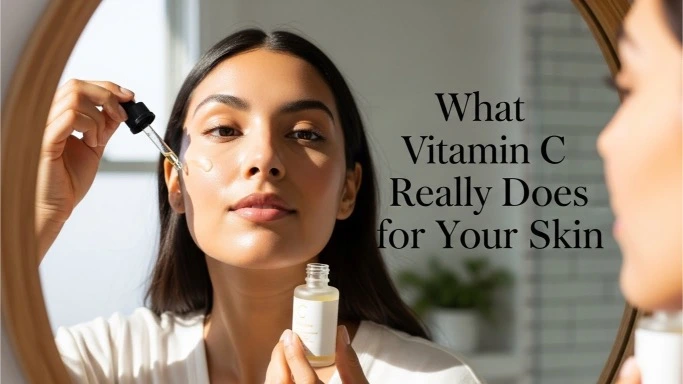
Vitamin C is everywhere in skincare. Serums. Creams. Masks. Even cleansers.
Everyone says you need it — but very few people explain vitamin C advantages for skin and what actually does to make your skin healthier, and what’s just marketing hype.
If you’ve ever wondered:
- Does vitamin C really brighten skin?
- Why does it tingle sometimes?
- Is it good for acne or just aging skin?
- Can it really fade dark spots?
You’re in the right place.
Vitamin C is one of the most researched skincare ingredients in the world, but it’s also one of the most misunderstood. Used the right way, it can transform dull, uneven skin. Used the wrong way, it can irritate, oxidize, or do almost nothing.
In this guide, we’ll break down the vitamin C advantages for your skin, the proven benefits, the biggest myths, how to use it properly, and how to know if it’s actually working for you.
No fluff. No fear-mongering. Just clear, honest skincare knowledge.
What Is Vitamin C in Skincare?
Vitamin C (also called ascorbic acid) is a powerful antioxidant. In skincare, it helps protect the skin from damage while supporting repair and renewal.
Your skin naturally contains vitamin C — but exposure to sunlight, pollution, stress, and aging lowers those levels over time. Topical vitamin C helps replenish what your skin loses daily.
According to research referenced by the National Institutes of Health, vitamin C plays a direct role in collagen production and protection against oxidative stress.
That’s why it’s considered a core ingredient, not a trend.
What Vitamin C Really Does for Your Skin
Let’s get specific. These benefits are backed by science, not skincare myths.
1. Vitamin C Brightens Skin Tone (For Real)
Vitamin C helps interrupt excess melanin production — the pigment responsible for dark spots and uneven tone.
What that means in real life:
- Dull skin looks more radiant
- Dark spots fade gradually
- Skin tone appears more even
- Post-acne marks improve over time
This doesn’t happen overnight. But with consistent use, vitamin C visibly improves clarity and glow.
Dermatology studies cited by the American Academy of Dermatology confirm vitamin C’s role in reducing hyperpigmentation.
2. It Helps Boost Collagen (But With Limits)
Vitamin C is essential for collagen synthesis. Without it, your body literally can’t build strong collagen fibers.
In skincare terms:
- Fine lines soften
- Skin looks firmer
- Texture improves
- Early signs of aging slow down
Important truth:
Vitamin C supports collagen — it doesn’t magically erase wrinkles. It works best as prevention and gradual improvement, not an instant fix.
If you’re also interested in collagen-supporting habits, this pairs well with: Anti-Aging Treatments: The Guide You Need to Know.
3. Vitamin C Protects Skin From Daily Damage
Every day, your skin faces:
- UV exposure
- Pollution
- Blue light
- Free radicals
Vitamin C neutralizes free radicals before they break down collagen and elastin.
Think of vitamin C as a shield, not sunscreen replacement.
According to clinical findings summarized by the Cleveland Clinic, antioxidants like vitamin C reduce environmental skin damage when used consistently.
4. It Helps Fade Acne Marks (But Not Active Acne)
Vitamin C works well on post-acne marks, especially red or brown spots left after breakouts heal.
What it helps with:
- Post-inflammatory hyperpigmentation
- Uneven tone after acne
- Mild redness
What it doesn’t do:
- Kill acne bacteria
- Replace acne medications
If acne is your main concern, vitamin C should be supporting, not leading, your routine.
5. Vitamin C Improves Overall Skin Texture
With regular use, many people notice:
- Smoother skin
- Smaller-looking pores
- More even makeup application
- Healthier surface texture
That’s because vitamin C supports cell turnover and collagen structure.
For pore-focused routines, this also pairs well with: How to Reduce Large Pores and Get Smooth Skin.
Common Vitamin C Myths (And the Truth)
Let’s clear up the confusion.
Myth 1: “Vitamin C Works Instantly”
Truth:
Vitamin C works gradually. Most people see visible improvement after 4–8 weeks of consistent use.
Instant glow often comes from hydration — not collagen changes.
Myth 2: “Higher Percentage Is Always Better”
Truth:
More isn’t always better.
- 10–15% works well for most people
- 20%+ increases irritation risk
- Sensitive skin often does better at lower strengths
Effectiveness depends on formulation, not just percentage.
Myth 3: “Vitamin C Thins Your Skin”
Truth:
Vitamin C actually supports skin thickness by encouraging collagen production. It does not thin the skin when used correctly.
Myth 4: “It Can Replace Sunscreen”
Truth:
Vitamin C helps protect against damage — but it cannot replace SPF. The best results come from using both.
Different Types of Vitamin C in Skincare

Not all vitamin C products are the same.
L-Ascorbic Acid
- Most effective
- Most researched
- Can irritate sensitive skin
Sodium Ascorbyl Phosphate
- Gentler
- Less irritating
- Good for acne-prone skin
Magnesium Ascorbyl Phosphate
- Hydrating
- Stable
- Suitable for dry or sensitive skin
Ascorbyl Glucoside
- Very stable
- Slower results
- Beginner-friendly
Choosing the right form matters more than chasing trends.
How to Use Vitamin C the Right Way

When to Apply
Morning is ideal. Vitamin C boosts antioxidant protection during the day.
How to Layer
- Cleanser
- Vitamin C serum
- Moisturizer
- Sunscreen
How Often
Start once daily. Sensitive skin may start every other morning.
Storage Matters
Vitamin C degrades with light and air.
Store it in:
- Dark bottles
- Cool, dry places
- Tightly closed containers
If it turns dark orange or brown, it’s likely oxidized.
Signs Your Vitamin C Is (or Isn’t) Working
Signs It’s Working
- Brighter skin
- Improved tone
- Gradual fading of spots
- Healthier glow
Signs It’s Not Right for You
- Persistent stinging
- Redness that doesn’t fade
- Breakouts that worsen
- No improvement after 8–10 weeks
Skincare should feel supportive, not stressful.
Can You Get Vitamin C From Food Instead?
Dietary vitamin C supports overall skin health, but topical vitamin C works directly where you need it.
Good vitamin C–rich foods include:
- Citrus fruits
- Bell peppers
- Strawberries
- Kiwi
- Broccoli
Nutrition + skincare together create the best results.
Who Should Use Vitamin C?
Vitamin C is helpful for:
- Dull skin
- Uneven tone
- Early aging signs
- Post-acne marks
- Pollution-exposed skin
People with very sensitive or compromised skin barriers should introduce it slowly.
FAQ: Vitamin C for Skin
Q1: Does vitamin C work for all skin types?
Yes, but the form and strength matter.
Q2: Can I use vitamin C at night?
You can, but it’s most beneficial in the morning.
Q4: Can vitamin C cause purging?
No. Breakouts usually indicate irritation, not purging.
Q4: How long until I see results?
Most people see changes in 4–8 weeks.
Q5: Can I mix vitamin C with retinol?
Yes, but use them at different times (vitamin C morning, retinol night).

The bottom line
Vitamin C isn’t magic — but it is powerful when used correctly.
It brightens skin, supports collagen, protects against daily damage, and improves tone over time. The key is realistic expectations, the right formulation, and consistent use.
Skip the hype. Ignore the myths. Focus on what your skin actually needs.
When used thoughtfully, vitamin C becomes one of the most reliable, skin-loving ingredients you can add to your routine.
Healthy skin isn’t about trends — it’s about understanding what works.